

Every product below is built on the same native Wharton’s Jelly foundation described throughout this page — the difference between products is concentration, cell type, and delivery format, not source quality.
| Stem Cell Products | |
|---|---|
| Format | Description |
| 3 mL | 10 Million MSCs – Umbilical Cord Blood Derived Stem Cells |
| 1 mL | 20 Million MSCs – Wharton's Jelly Stem Cells |
| 1 mL | 41.75 Million MSCs – Wharton's Jelly Stem Cells |
| 1 mL | 5 Million Muse Cells + 20 Million MSCs – Wharton's Jelly Stem Cells |
| Muse Cell-Derived Exosomes | |
|---|---|
| Format | Description |
| 1 mL | 350 Billion Muse Cell Exosomes |
| 1 mL | 700 Billion Muse Cell Exosomes |
| MSC-Derived Exosomes | |
|---|---|
| Format | Description |
| 1 mL | 17 Billion MSC Exosomes |
| 5 mL | 100 Billion MSC Exosomes |
| 1 mL | 350 Billion MSC Exosomes |
| 2 mL | 700 Billion MSC Exosomes |
| Wharton's Jelly Scaffolding Matrix & Cord Blood Plasma | |
|---|---|
| Format | Description |
| 1 mL | Wharton's Jelly Scaffolding Matrix |
| 2 mL | Wharton's Jelly Scaffolding Matrix |
| 1 mL | Cord Blood Plasma |
THE FOUNDATION
Stem cell research generally sorts cells into four broad categories: embryonic, adult, induced pluripotent (iPSC), and perinatal. Embryonic stem cells are pluripotent they can become nearly any cell in the body but producing them requires destroying a human embryo, which has made them the subject of ongoing ethical debate, and they carry a documented risk of forming tumors if their differentiation isn’t tightly controlled. Induced pluripotent stem cells sidestep the embryo question entirely by genetically reprogramming a patient’s own adult cells to behave like embryonic ones, but that reprogramming is itself the open question researchers still don’t have long-term certainty about what a reprogrammed cell will do over time. Adult stem cells, harvested from a patient’s own bone marrow or fat tissue, avoid both of those problems, but they come with a cost of their own: they decline in number and potency as the donor ages, and collecting them requires an invasive procedure in the first place.
Perinatal MSCs – harvested from umbilical cord tissue that is otherwise discarded after a healthy birth sit outside all three of those tradeoffs. No embryo is destroyed. No genetic reprogramming is involved. And because the source is a newborn rather than an aging adult, the cells arrive with a differentiation capacity and paracrine potency that a bone marrow donor decades into adulthood simply cannot match. This is why perinatal stem cells have been described in the research literature as combining the most useful qualities of adult and embryonic stem cells, while carrying an immune-privileged profile that neither category reliably offers on its own.
It’s this combination — the ability to find damage on its own, to calm or balance the immune response around it, and to broadcast a wide field of repair signals to everything nearby — that has made MSCs the standard cell type behind modern regenerative medicine, with a much deeper base of published research and clinical use than any competing stem cell category. Vitalgenics sources every MSC used in its products from Wharton’s Jelly rather than bone marrow or fat, for the reasons detailed in the next section.
THE FOUNDATION
Every regenerative product starts with a source tissue and a growing environment. Vitalgenics products start with native Wharton’s Jelly — and stay there through the entire culturing process, under a patent protection no other manufacturer can legally replicate.
Stem cells don’t exist in a vacuum. Every mesenchymal stem cell (MSC) lives inside a “niche” — a specific tissue environment built from growth factors, extracellular matrix proteins, mechanical signals, and chemical cues that tell the cell what it is, how to behave, and how potent to remain.
Pull a cell out of that niche and grow it in something foreign, and the cell survives — but it is no longer the same cell. Published research on stem cell niches confirms that the native microenvironment directly governs a cell’s self-renewal, proliferation, and differentiation capacity, and that culturing MSCs on their own native tissue matrix preserves “stemness” at levels two to seven times higher than culturing on commercial substitutes.
Wharton’s Jelly is the natural living environment for the stem cells inside the umbilical cord — rich in hyaluronic acid, collagens, glycosaminoglycans, and the growth factors that signal these specific cells how to function.
Our laboratory partner holds six issued U.S. and international patents on the only legal method for isolating, purifying, and culturing native Wharton’s Jelly stem cells inside that original tissue environment, rather than transferring them into an artificial growth medium. No other manufacturer in the world is permitted to culture cells this way.
Patented Native Wharton's Jelly Process
These patents are titled “Native Wharton’s Jelly Stem Cells and Their Purification.” Three separate, stacked U.S. patents mean a competitor cannot simply design around one patent and claim freedom to operate.
What Everyone Else Is Forced to Use Instead
Every other birth-tissue manufacturer has to remove stem cells from Wharton’s Jelly and grow them in a foreign substitute — because the native method is patented and unavailable to them. That substitute is almost always one of two things, and both come with real tradeoffs.
| Feature | Native Wharton's Jelly (Vitalgenics) |
Human Platelet Lysate | Fetal Bovine Serum |
|---|---|---|---|
| Culture environment | Native umbilical Wharton's Jelly | Pooled human platelet lysate | Fetal calf blood serum |
| Xeno-free | Yes | Yes | No |
| Native niche preserved | Yes | No | No |
| Risk of animal pathogen transfer | None | None | Documented |
| Risk of xenoimmunization in patient | None | None | Documented |
| Batch-to-batch consistency | High | Variable (pooled donors) | Highly variable |
| Legally available to competitors | No — patented | Yes | Yes |
Why This Determines the Strength of the Exosomes, Too
Exosomes are not random cargo — they are a snapshot of the cell that released them. The proteins, microRNAs, and signaling molecules packaged into every exosome reflect the state of the parent cell at the moment of release.
A stem cell that has lived its entire culture life inside native Wharton’s Jelly releases exosomes loaded with true umbilical signaling cargo. A stem cell grown in platelet lysate releases exosomes that read more like platelet biology than cord biology. A stem cell grown in fetal bovine serum releases exosomes carrying trace bovine material.
When the entire premise of using a Wharton’s Jelly-derived biologic is to deliver the regenerative signaling of native umbilical tissue, the upstream culture method is what determines whether a patient receives that biology — or a diluted version of it.
STEM CELLS
Muse cells (Multilineage-differentiating Stress-Enduring cells) are a naturally occurring subpopulation of mesenchymal stem cells, identified by Dr. Mari Dezawa’s group at Tohoku University by the SSEA-3 surface marker. They are not genetically modified and not synthetic — they are a rare, elite population the body already makes, isolated and concentrated for therapeutic use.
Standard umbilical cord tissue contains fewer than 1% Muse cells naturally — far too few, on their own, for a meaningful therapeutic dose. Without documented SSEA-3 sorting and batch verification, a product simply does not contain therapeutic Muse cell levels, regardless of what it’s labeled. Vitalgenics products use a verified, SSEA-3-tested Muse-enriched formulation cultured in native Wharton’s Jelly.
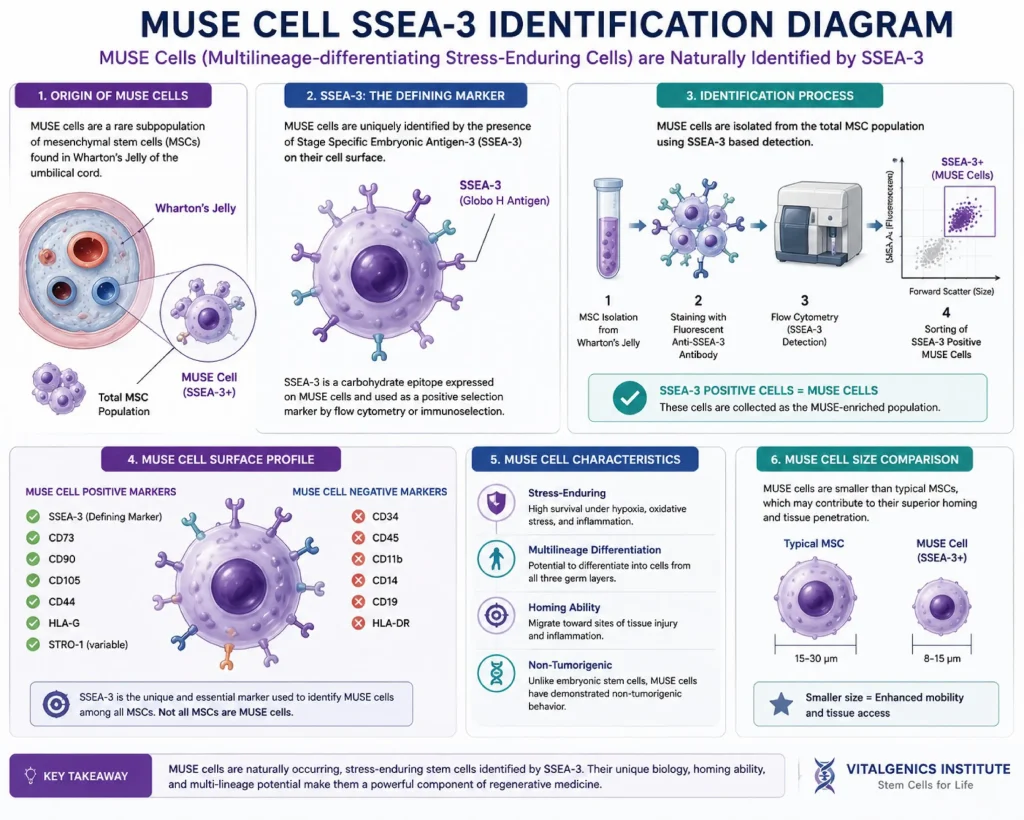
What Makes Muse Cells Different from a Standard MSC
At 8–15 micrometers, Muse cells are roughly half the size of a standard MSC (15–25 micrometers). Standard MSCs get trapped in the lungs on first pass through the bloodstream; 80–99% never reach the target tissue. Muse cells pass through and travel systemically.
Damaged tissue releases sphingosine-1-phosphate (S1P) and SDF-1 as distress signals. Muse cells carry the receptors for both — S1PR2 and CXCR4 — and follow that chemical trail directly to the site of injury, including across the blood-brain barrier.
Muse cells are identified precisely because they survive conditions — hypoxia, oxidative stress, proteolytic enzymes — that kill standard MSCs. Injected into an inflamed joint or damaged tissue bed, they don't die on arrival. They engraft and get to work.
The Engraftment Difference
This is the distinction that matters most between Muse cells and a standard MSC product, and it’s worth stating plainly. Both cell types come from mesenchymal populations. Both are delivered the same way. But a standard MSC largely lodges in the lungs and works by releasing signaling molecules outward — it never becomes new tissue. A Muse cell follows the injury signal to its source, engrafts, and differentiates into whatever that tissue needs.
That’s possible because Muse cells are pluripotent-like: unlike standard MSCs, which are limited to mesodermal tissue such as bone, cartilage, fat, and muscle, Muse cells can differentiate across all three embryonic germ layers — ectoderm, mesoderm, and endoderm — without the genetic manipulation used to create induced pluripotent stem cells.
Immune privilege: Muse cells express low HLA class I, negligible HLA class II, and HLA-G at approximately 90% — the same immune-tolerance molecule the placenta uses to prevent the mother’s immune system from rejecting the fetus.
Why the Formulation Ratio Matters
Concentration is not a detail — it’s a safety issue. A pure, 100% Muse cell preparation removes the companion cell population that buffers the immune response, while standard umbilical cord products with well under 1% Muse content cannot deliver meaningful trilineage repair no matter how the label reads.
Vitalgenics uses an SSEA-3-verified formulation that blends a therapeutic concentration of Muse cells with a majority population of supporting Wharton’s Jelly MSCs — enough Muse cells for genuine multilineage homing and differentiation, and enough companion cells to keep the immune response modulated.
The Math Behind Our 5 Million Muse + 20 Million MSC Formulation
Run the numbers on our flagship Muse-enhanced stem cell product and the ratio lands exactly on the concentration described above: 5 million Muse cells inside a 25 million cell total is a 20% Muse fraction, carried by 20 million supporting Wharton’s Jelly MSCs — an 80% companion population. That isn’t an arbitrary blend. It’s the same 20/80 ratio that governs every Muse product Vitalgenics offers, chosen because it’s the point where efficacy and safety both hold.
| Feature | Standard UCC (<1% Muse) |
Pure Muse (100%) |
Vitalgenics (~20% Muse) |
|---|---|---|---|
| Muse cell content | Less than 1% | 100% | ~20% SSEA-3 verified |
| Trilineage signaling | Negligible | Maximum, but unmodulated | Therapeutically optimal |
| Safety profile | Safe but limited efficacy | Documented immune reactions | Safe and effective |
| Companion MSC support | Present but low potency | Absent | Full 80% supporting population |
| SSEA-3 batch verification | Rarely tested | Tested | Every batch verified |
The 80% companion population is not filler – it’s actively doing the three jobs described earlier in the mesenchymal stem cell section: homing to reinforce the Muse cells’ own chemical trail-following, immunomodulation to keep the overall immune response calm and tolerant, and paracrine signaling to broadcast repair cues to everything nearby. The 20% Muse fraction adds the one thing that companion population can’t do on its own — engraftment, and differentiation into the tissue that’s actually missing.
Push the Muse fraction to 100% and you lose that buffering, calming, signal-broadcasting supporting cast, and the documented result is a higher immune reaction rate. Leave it under 1%, as standard umbilical cord products do, and there isn’t enough Muse cell presence in the syringe for meaningful multilineage repair in the first place. Twenty percent is the concentration at which both halves of the formulation are doing real work.
CELL-FREE SIGNALING
Exosomes are nano-sized vesicles — roughly 30 to 150 nanometers — released by cells to carry proteins, lipids, and regulatory RNA to other cells. Much of what a stem cell accomplishes after infusion happens through these vesicles rather than through the cell body itself.
Because they carry no living cell, exosomes distribute more freely than any cell-based product. They are a fraction of the size of a cell, so they aren’t trapped by the lungs on first pass the way whole cells are, and they cross barriers — including into the central nervous system — that cells cannot.
With no cell to engraft or be recognized as foreign, the infusion and immune profile is milder than any cell therapy. The tradeoff is honest: exosomes deliver the signal, but they never become the replacement tissue.
They instruct; they do not construct.
This is exactly why they pair so well alongside a cell therapy rather than in place of one.
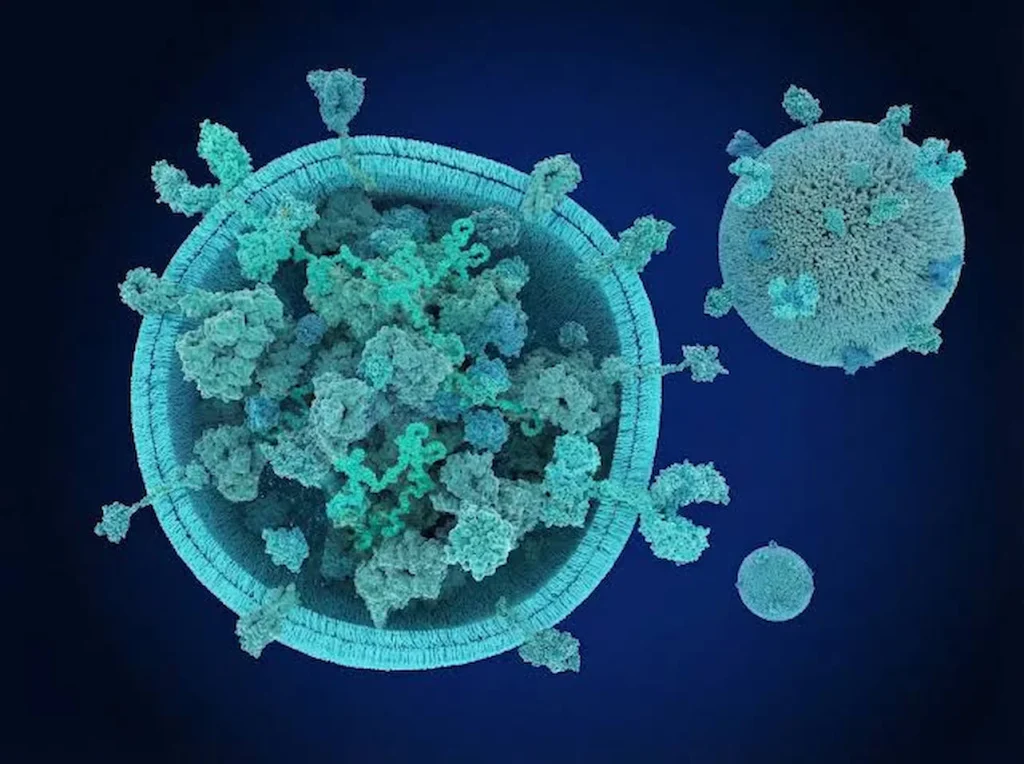
Why the Parent Cell Decides the Quality of the Exosome
An exosome is only as good as the cell that made it — its cargo is a direct reflection of the parent cell’s biology at the moment of release. A standard MSC produces a standard exosome, carrying signaling limited to the mesodermal tissues that standard MSCs themselves are limited to. A Muse cell — pluripotent, stress-enduring, and cultured in its native Wharton’s Jelly niche — produces an exosome carrying a categorically different cargo.
| Feature | Standard MSC Exosomes | Muse Cell Exosomes |
|---|---|---|
| Parent cell potency | Multipotent (mesodermal signaling only) | Pluripotent (all three germ layers) |
| Tissue signaling range | Bone, cartilage, fat, muscle | Nerve, skin, liver, gut, bone, cartilage, muscle, cardiac, lung, pancreas |
| Serpin protease inhibitors | Not detected | Present – blocks MMPs, thrombin, neutrophil elastase |
| Anti-apoptotic (14-3-3) signaling | Lower levels | High levels across most isomers |
| HLA-G immunomodulation | Low expression | ~90% expression |
| Stress-response cargo | Limited | Robust – reflects a parent cell built to survive extreme stress |
In practical terms: a standard MSC exosome tells surrounding cells that help is on the way. A Muse cell exosome carries that same signal plus direct protease-blocking cargo, survival proteins that protect cells from programmed death, and immune-calming molecules.
DELIVERY MATRIX
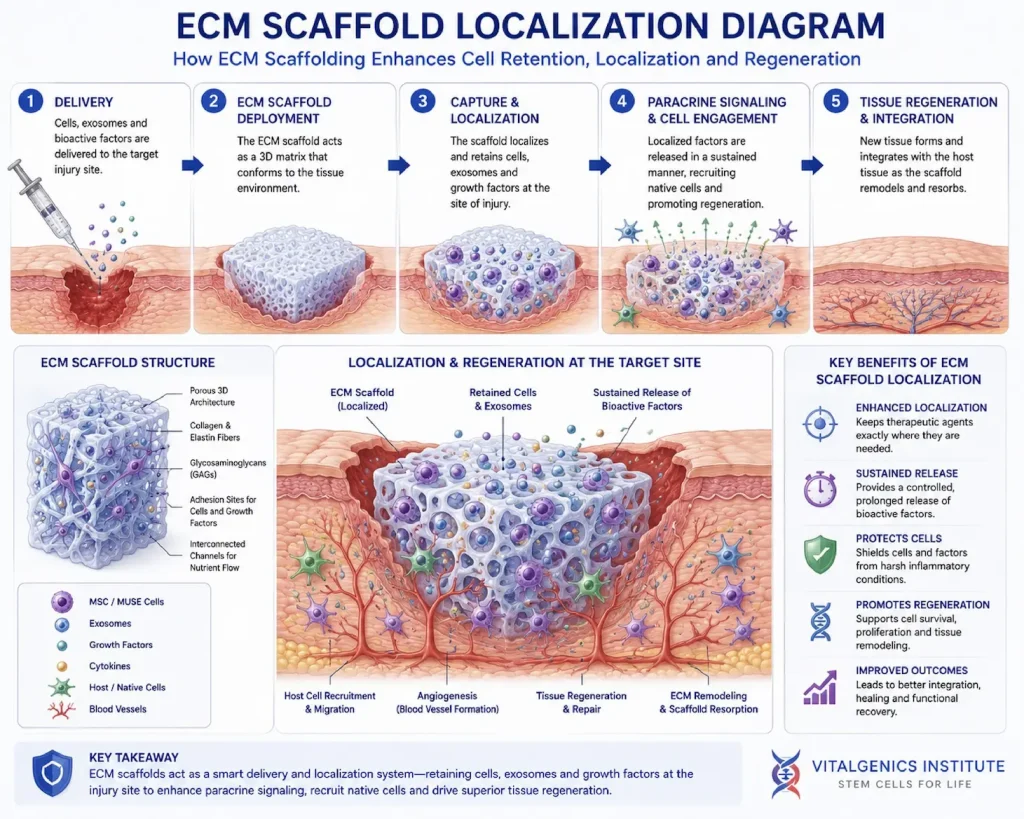
A liquid injection of Wharton’s Jelly extract or exosomes is powerful — and short-lived. Growth factors and cytokines in a liquid injection typically degrade and diffuse away within hours to days, which limits how much regenerative benefit an injection site actually receives before the signal is gone.
Wharton’s Jelly Scaffolding Matrix solves that problem. It’s derived from heated Wharton’s Jelly and functions as a controlled-release carrier: rather than dissipating in hours, it breaks down gradually over months, giving growth factors and extracellular matrix proteins a sustained, time-release delivery instead of a single short-lived burst.
The structured matrix itself also gives stem cells something to adhere to, migrate through, and differentiate within — closer to how they behave in native tissue than when suspended in free liquid.
Why It Outperforms Other Carriers
| Carrier | Retention | Release Profile | Structural Support |
|---|---|---|---|
| Liquid injection alone | Hours to days | Immediate, uncontrolled | None |
| Platelet-rich fibrin (PRF) | 1–2 weeks | Initial spike, then rapid depletion | Minimal – lacks structural ECM |
| Hyaluronic acid (HA) | A few weeks | Lubrication only, no sustained signaling | None – no framework for cell attachment |
| Wharton’s Jelly Scaffolding Matrix | Several months | Gradual, controlled breakdown | Mimics native extracellular matrix |
PRF degrades within one to two weeks and releases its growth factors in an uncontrolled burst rather than a sustained curve. Hyaluronic acid functions primarily as a lubricant – useful for hydration, but with no meaningful regenerative bioactivity of its own, and it’s enzymatically cleared within weeks. Neither provides the structural extracellular matrix that supports ongoing cell attachment, migration, and differentiation the way a native tissue-derived scaffold does.
How It’s Used Clinically
Wharton’s Jelly extract or exosomes are combined with Scaffolding Matrix at a 1:1 ratio for intra-articular and soft-tissue injections, available in 1 mL and 2 mL preparations. Scaffolding is built for local, targeted delivery — for joint and soft-tissue procedures where holding the biologic at the injection site matters. It is not used with intravenous protocols, which are designed around systemic homing rather than local retention.
CELL-FREE SYSTEMIC SUPPORT
No cells at all — and that’s the point. Cord blood plasma carries the growth factors, cytokines, exosomes, and signaling proteins found in newborn circulation, in the ratios they naturally occur. Nothing engrafts and nothing differentiates.
What it delivers is a concentrated set of instructions that tell the patient’s own cells to behave younger.
What Sets It Apart from Every Other Option
Because there are no cells in the product, there’s no pulmonary first-pass trapping and no engraftment to manage — which gives cord blood plasma the mildest infusion profile of any regenerative product Vitalgenics offers.
That combination of broad systemic reach and a gentle tolerability profile is what makes it particularly well suited to general vitality and longevity work, to patients who want a lower-intensity entry point into regenerative therapy, and as a systemic layer alongside a cell-based or exosome therapy.
How It Stacks with Other Therapies
Cord blood plasma doesn’t compete with cell or exosome therapies — it improves the environment they’re working in. Because it carries signals rather than cells, it layers cleanly with any other product in the Vitalgenics line, functioning as a systemic support layer before, between, or alongside more targeted interventions.
STANDARDS
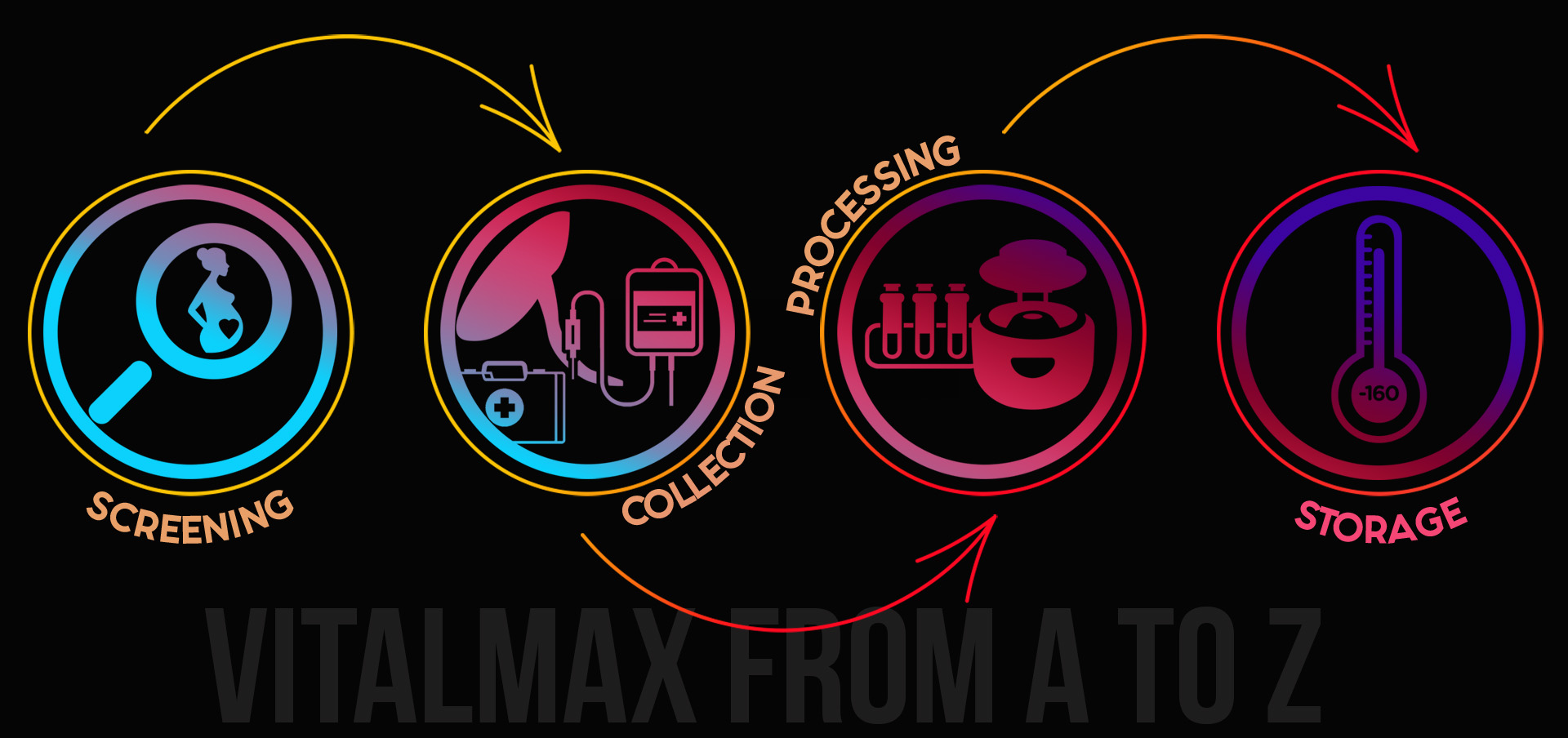
SCREENING
Source tissue is collected from screened, consenting donors within the United States, following a complete donor medical history, physical assessment, and serological testing panel before any collection occurs.
COLLECTION
Source tissue is collected aseptically at delivery from screened, consenting donors within the United States.
PROCESSING
From there, cells move directly into our laboratory partner’s patented native Wharton’s Jelly culturing process — never into platelet lysate, never into fetal bovine serum — through to final formulation and batch release.
VERIFICATION
Cellular products undergo cell count and viability testing along with MSC marker panel analysis (CD73, CD90, CD105) to confirm phenotype. Muse-enriched products are additionally verified for SSEA-3 expression on every batch.
Cellular products undergo cell count and viability testing along with MSC marker panel analysis (CD73, CD90, CD105) to confirm phenotype; Muse-enriched products are additionally verified for SSEA-3 expression on every batch.
Extracellular vesicle products are characterized using Nanoparticle Tracking Analysis and Tunable Resistive Pulse Sensing to confirm particle size distribution and concentration.
Important Information for Providers & Patients
Patent information is based on publicly issued U.S. and international patents held by the laboratory partner. Research references throughout this document reflect published peer-reviewed literature on Muse cells, mesenchymal stem cells, exosomes, Wharton’s Jelly, and related regenerative biology. Product-specific characteristics, concentrations, testing, and comparative data are based on manufacturer and laboratory documentation where applicable.
Muse cell, exosome, and cord blood biologic products referenced in this document are not FDA approved and are intended for use by licensed healthcare professionals in accordance with applicable state and federal regulations. This document is intended for informational purposes for healthcare providers and does not constitute medical advice or a guarantee of clinical outcome. Individual results vary.
Join the Vitalgenics Practitioner Network (VPN) and get exclusive product discounts, proven clinical protocols, and complete marketing systems – everything you need to launch & scale your regenerative practice.